Blog
Practical notes on building data platforms, running ML systems in production, and security that cuts noise instead of adding it.


E
Evgeni AltshulAugust 12, 2026
When Intelligence Stops Being Scarce
I keep catching myself treating AI like a clever coworker in my pocket. That story is too small. Here is the one I am actually living through.

E
Evgeni AltshulJune 16, 2026
Anthropic's Fable 5 and Mythos 5: Why They Were Pulled, and What Comes Next
Anthropic released two of its most capable AI systems in June 2026—and shut them down three days later after a US government order. Here is what Fable 5 and Mythos 5 actually were, why they worried people, and what their brief life tells us about the road ahead.


E
Evgeni AltshulJune 16, 2026
What Is Qdrant? How Vector Databases Power Modern AI Search
Qdrant is an open-source vector database built for high-performance similarity search. Learn what it is, how it works under the hood, where teams use it, and real production patterns for RAG and semantic search.


E
Evgeni AltshulMarch 4, 2026
The Strategic Metamorphosis of the Musk Conglomerate
A 2026 Institutional Analysis of Artificial Intelligence, Orbital Infrastructure, and Autonomous Robotics
E
Evgeni AltshulNovember 24, 2025
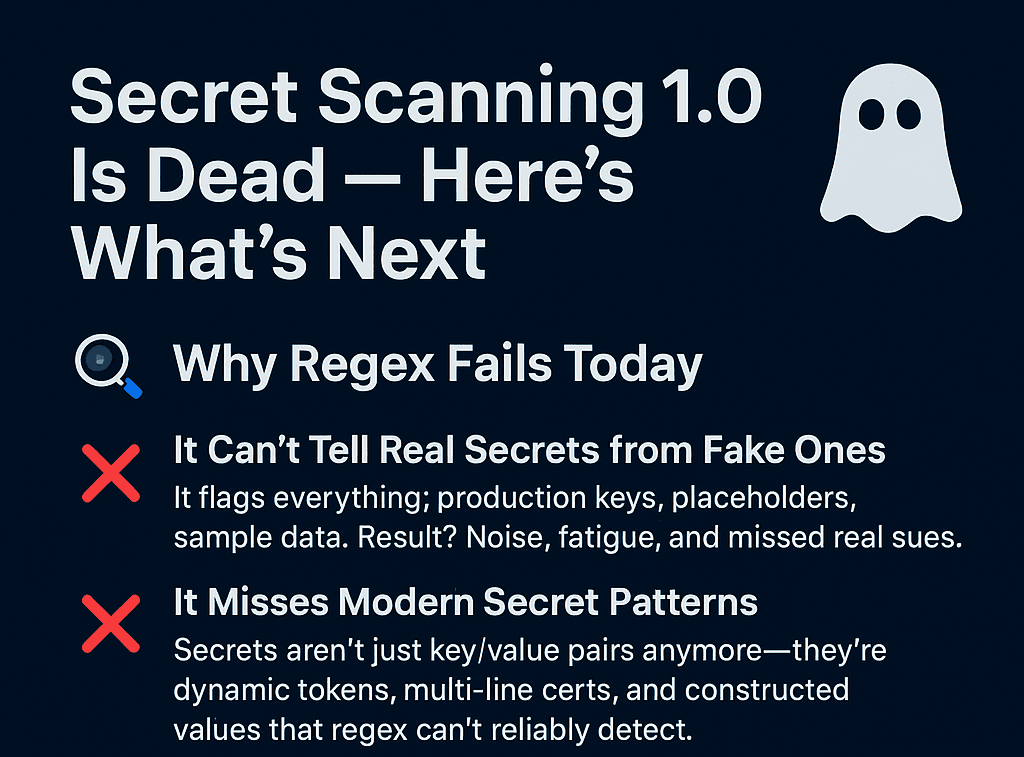
Secret Scanning is Dead!
Regex secret scanners miss context and flood teams with noise. Learn why pattern matching fails in 2025 and how context-aware, AI-assisted secret security reduces false positives.

E
Evgeni AltshulSeptember 18, 2025
From Data Platforms to AI Platforms
LLMs didn’t kill data engineering—they made it more important. Here’s what changes in architecture, operations, and skills when you introduce RAG, vector search, and LLMOps.


I
Ivan NikalayeuSeptember 16, 2025
Data Quality Monitoring During Platform Migration
Platform migrations hide data issues until reports break. A practical playbook for monitoring freshness, completeness, and schema drift so analytics stay trustworthy mid-cutover.

E
Evgeni AltshulJune 7, 2025
Vector Databases for Modern AI Applications
Vector databases store embeddings for semantic search and RAG. Learn what they optimize for, how similarity search works, and when a dedicated vector store beats a general database.

E
Evgeni AltshulJune 7, 2025
Time Series Databases: A Practical Guide
Time series data powers metrics, IoT, and observability. Compare how time series databases store, compress, and query high-volume timestamps—and when to use one in production.